
Community Centered Mobility SErvice System
M.a.a.S Systems | Autonomous Vehicles | Shared Systems | Service Design | UX Design | Business generation | Trust & Accessibility | Public Private
Background
This is my thesis project on transportation systems, in which I developed a successful white-label mobility service platform product with a viable, real-world business model. A proof-of-concept model was established in collaboration with ArtCenter College and the city of Pasadena.
This project involves a comprehensive assessment of the feasibility of autonomous and multimodal transportation systems. A comprehensive business model was developed to create a win-win for all stakeholders.
Role
Strategist, Product Planning, and Service Designer.
I led the end-to-end strategy and design of the service, including system definition, business modeling, and experience design. My responsibilities spanned stakeholder analysis, service architecture, value proposition design, and translating complex transportation systems into an integrated, user-centered service platform.
Timeline: 2016-2017
Partner: ArtCenter development planners, City Planners
Platform: Mobile, Web, Enterprise
Status: Complete
Outcome:
This project has achieved two goals.
I have presented a complete strategic direction for project execution and my entrepreneurial approach for the project.
Provided the ArtCenter organization community with the system to consider for their business development with management.
Project
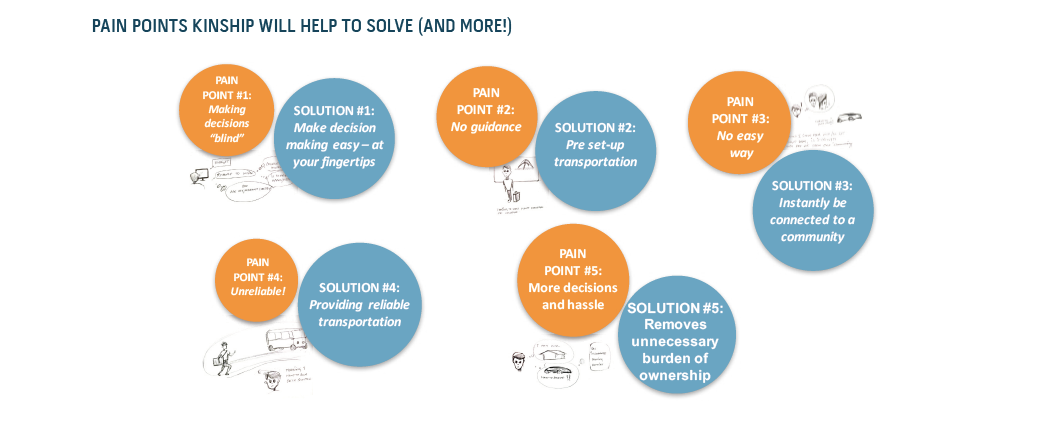
Kinship is a service system that enables new city dwellers (students, newcomers, and campus communities) to seamlessly access housing and transportation services at their fingertips.
Problem Statement
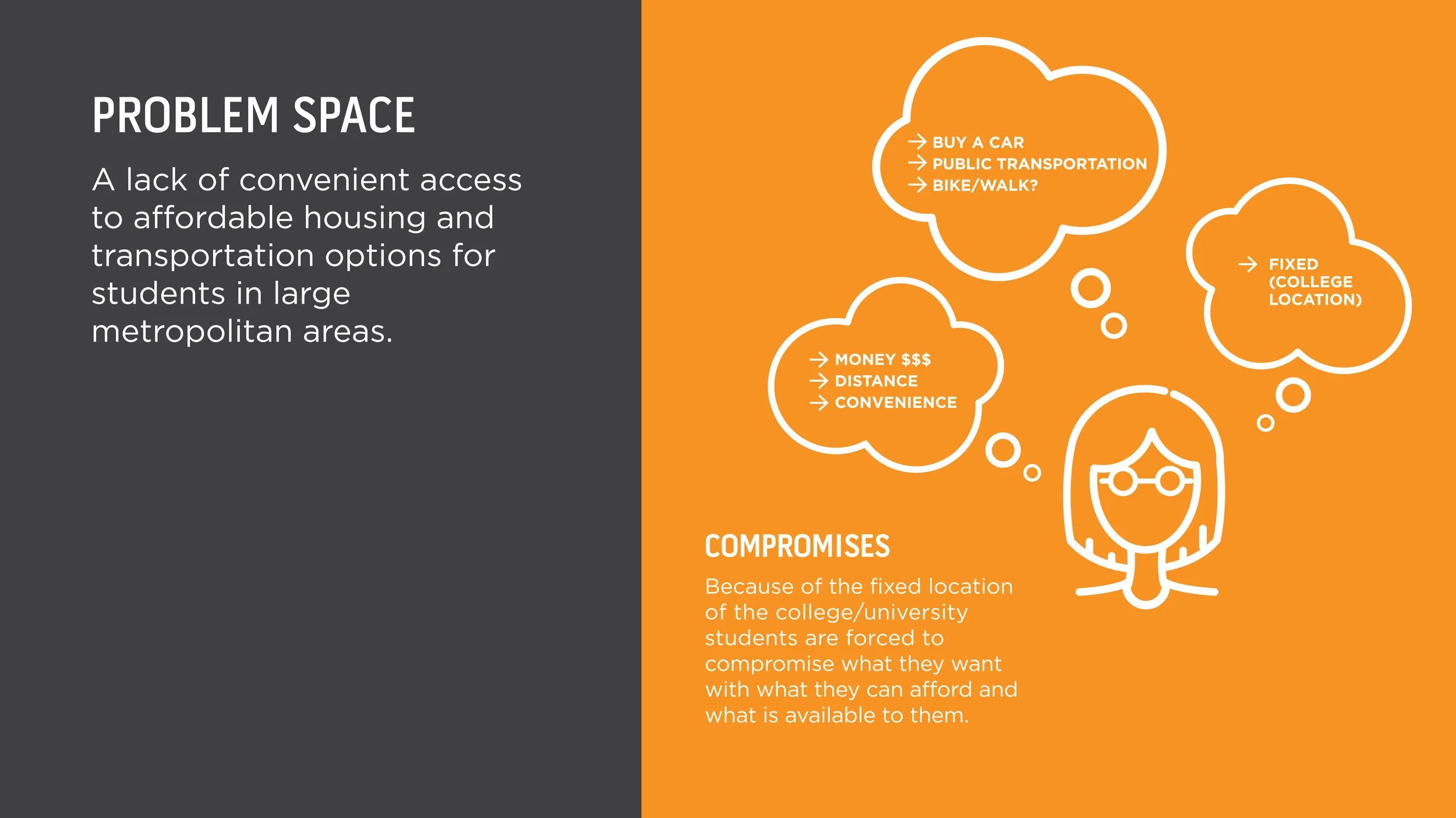
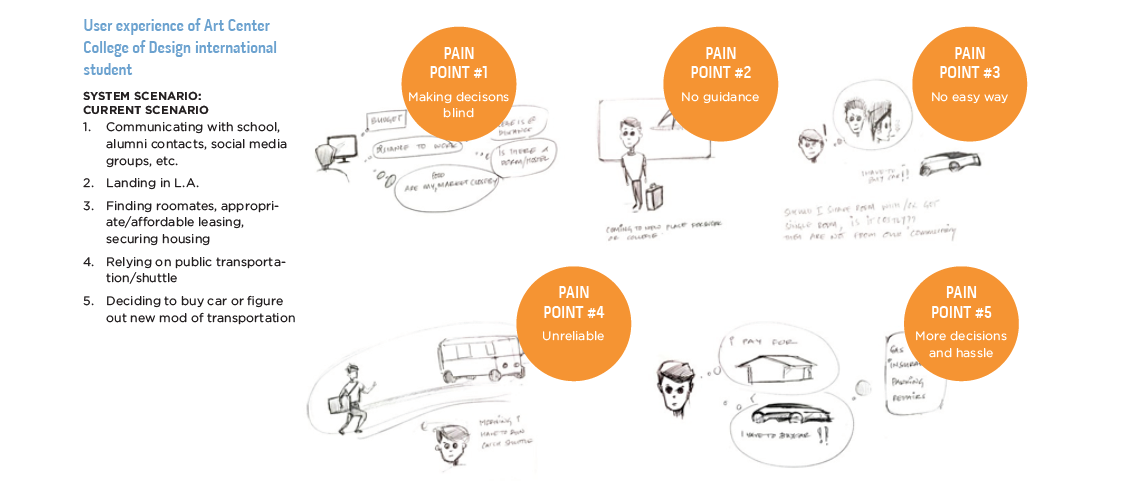
A lack of convenient access to affordable housing and transportation options for students in larger metropolitan areas.
Painpoints
Because the college or university's fixed in location, students must balance what they want, what they can afford, and what is available.
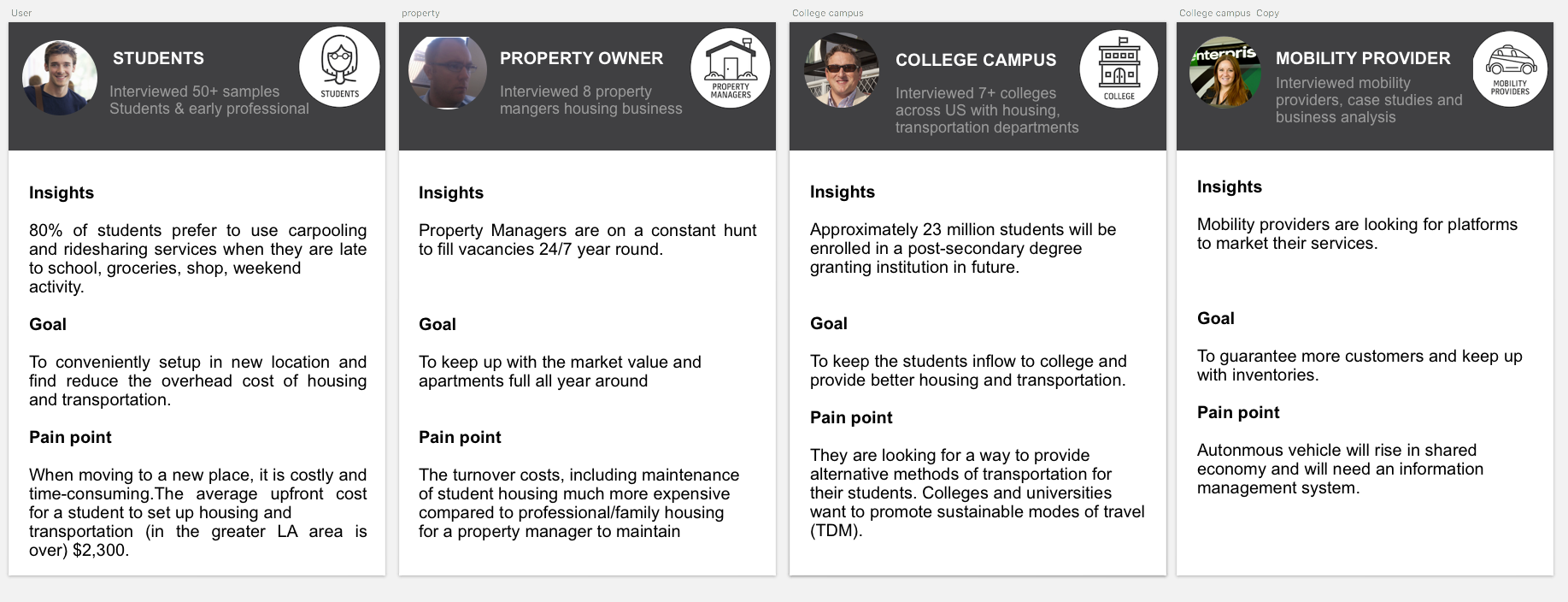
Research and Insights from Stakeholders
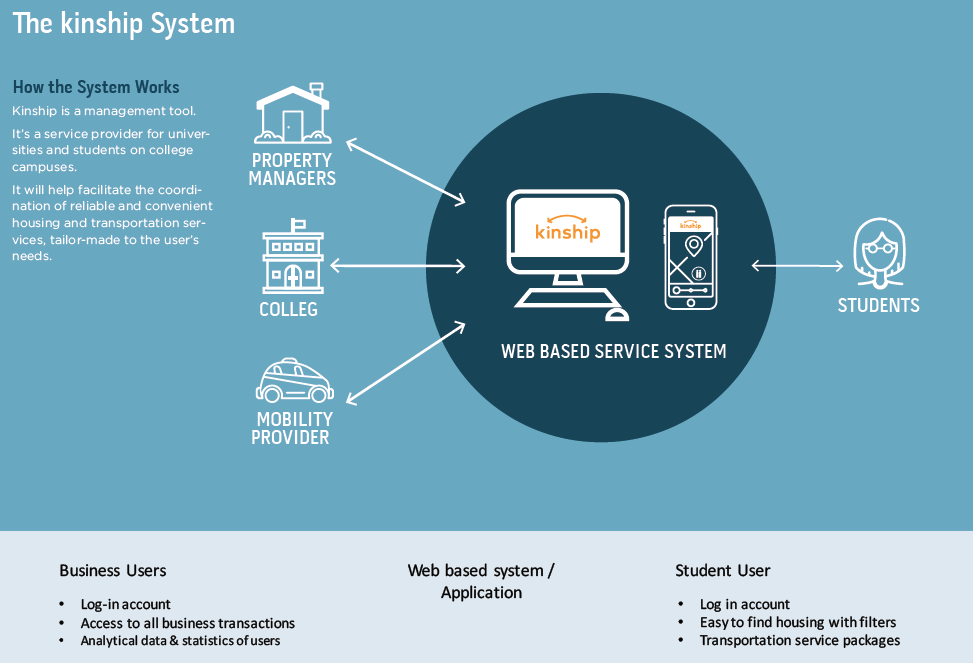
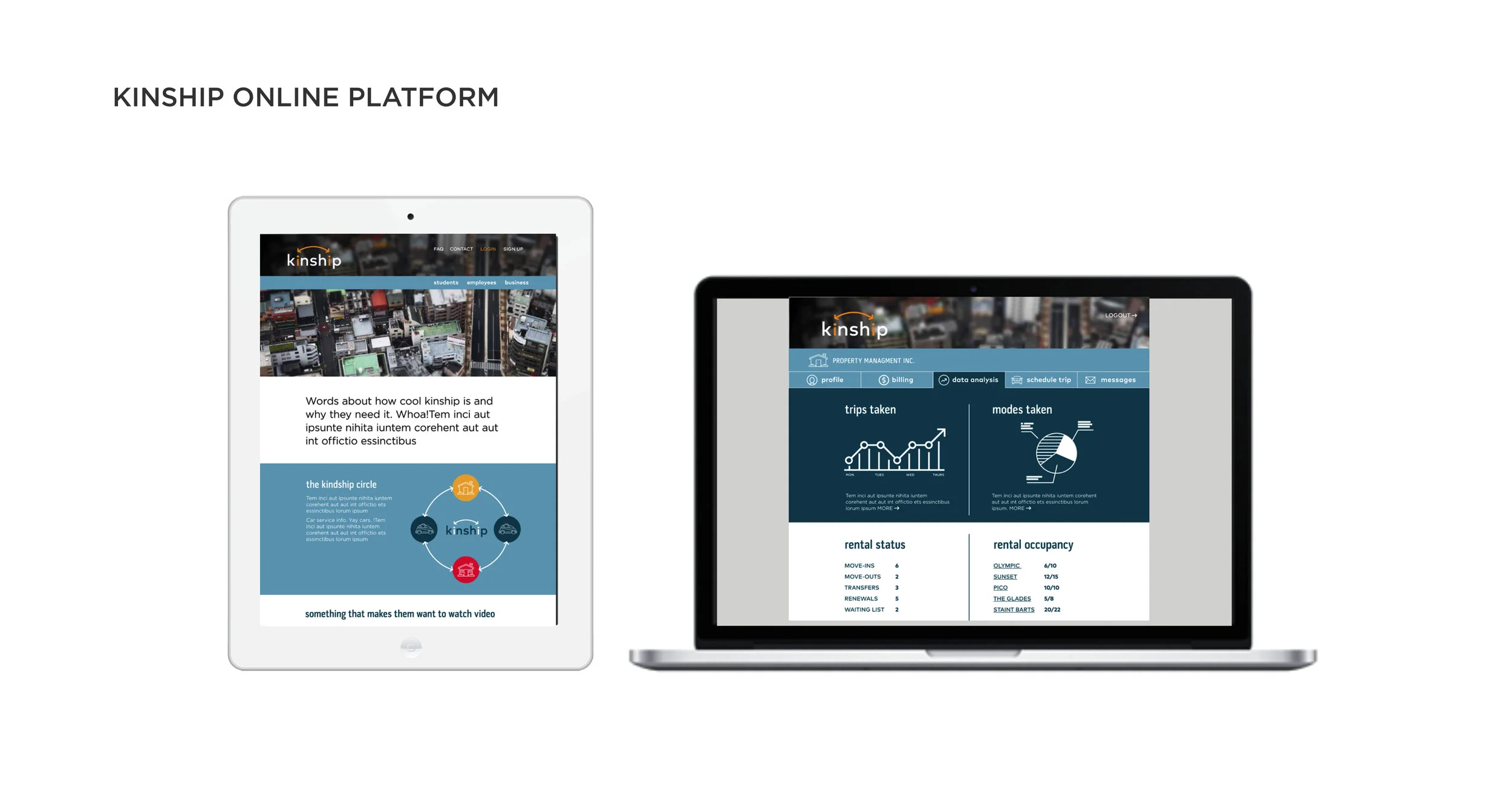
KINSHIP SYSTEM: Kinship is a web-based platform that leverages B2B collaboration to provide college communities (students) with on-demand transportation and affordable housing through an easy-to-use app.
Kinship partners with transportation providers, property managers, and colleges to create a one-of-a-kind experience for users.
PROOF OF CONCEPT
To test the hypothesis and validate research, a Collaborative effort was taken to partner with the ArtCenter Pasadena as a use case. The business plan is validated with the college and local vendors to ensure future success.
Below is the Master Plan for the ArtCenter Campus in Pasadena, California. This Master plan will be primarily affected by the influx of crowds into the city and by sustainable transportation needs. This ArtCenter has a significant point of interest that extends to the North Campus as well.
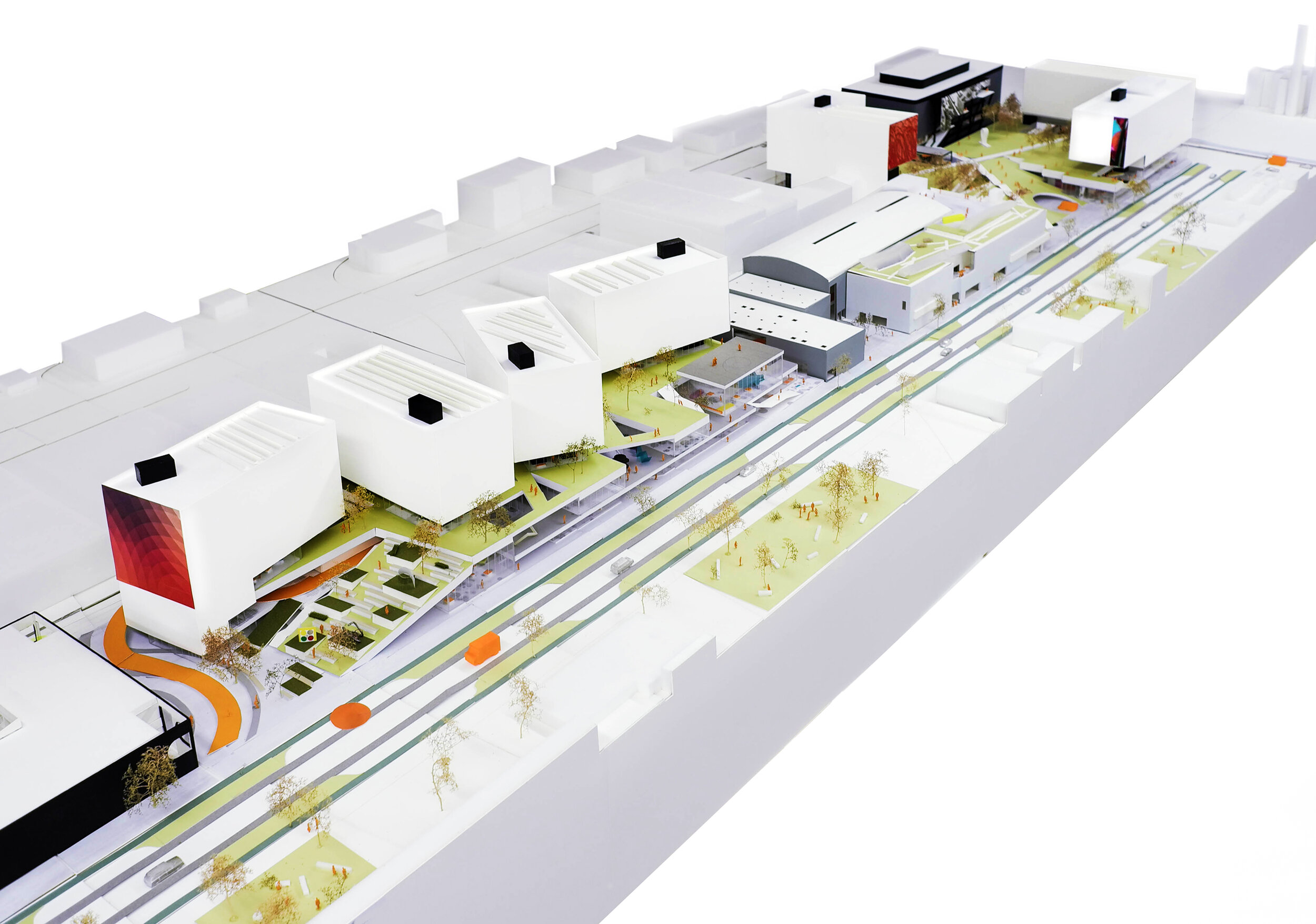
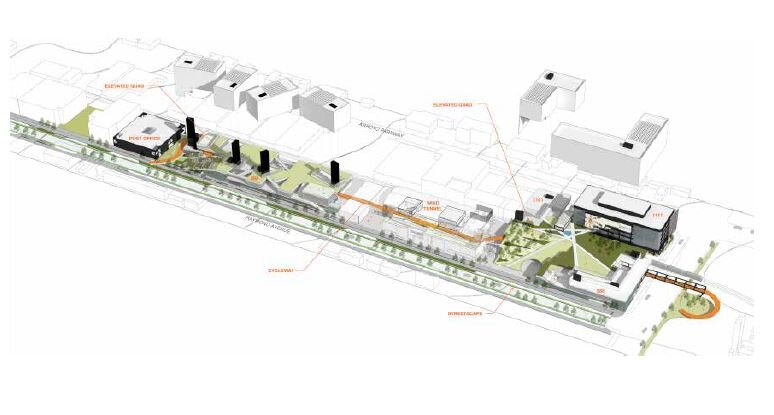
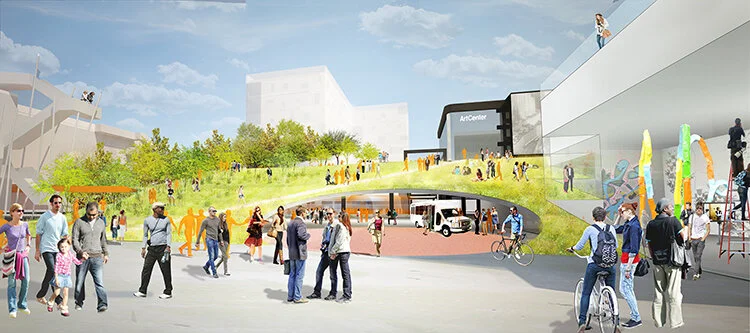
Service Area: Kinships' use case area is Pasadena. The availability of affordable housing and the distance from the campus center determine the service area radius. Each service area will be factored on a case-by-case basis.
Business Needs from ArtCenter Infrastructure
ArtCenter needs off-campus housing.
The College will provide and has agreed to assume the risk of investing in off-campus housing for an estimated 350 students.
ArtCenter has aspirations to build a robust campus community.
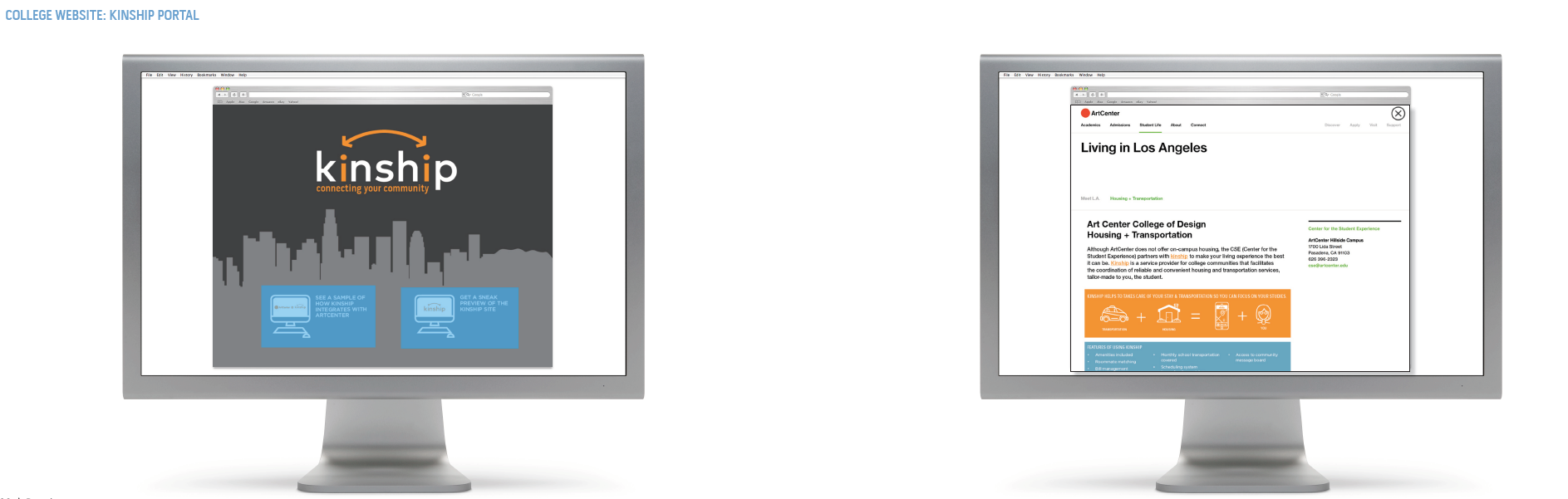
KINSHIP PORTAL FOR ARTCENTER STUDENTS
Students at the time of admission will be provided an option to use the online portal, which can guide them for the new experience in a new city.
KINSHIP APPLICATION SERVICE FOR ARTCENTER STUDENTS
Students get to use the Application as soon as they sign up for the program and enroll with the college.
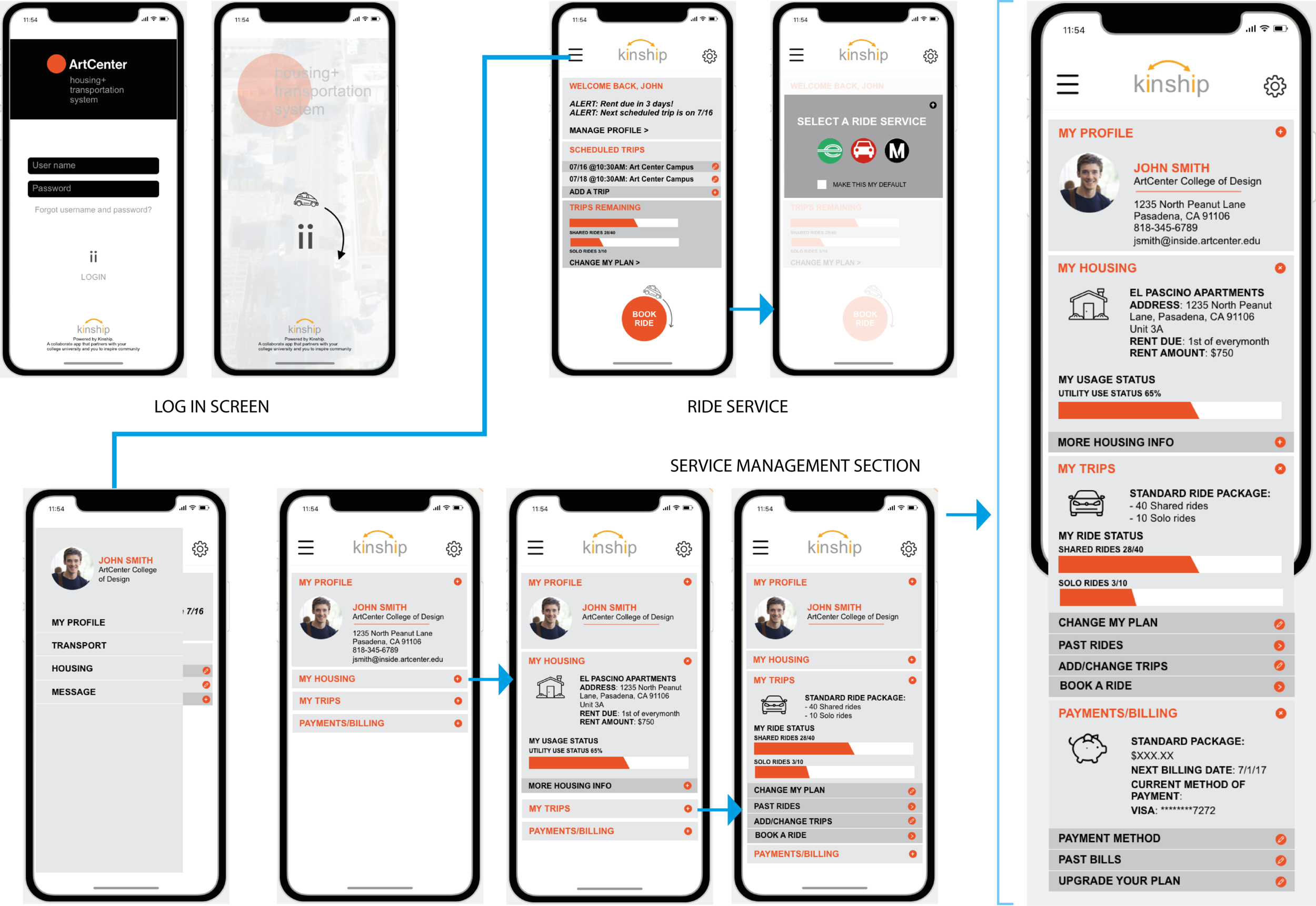
Low Fidelity prototype: Mobile application for Students
USER JOURNEY OF STUDENT WHEN COLLEGE PARTNERS WITH KINSHIP SERVICES
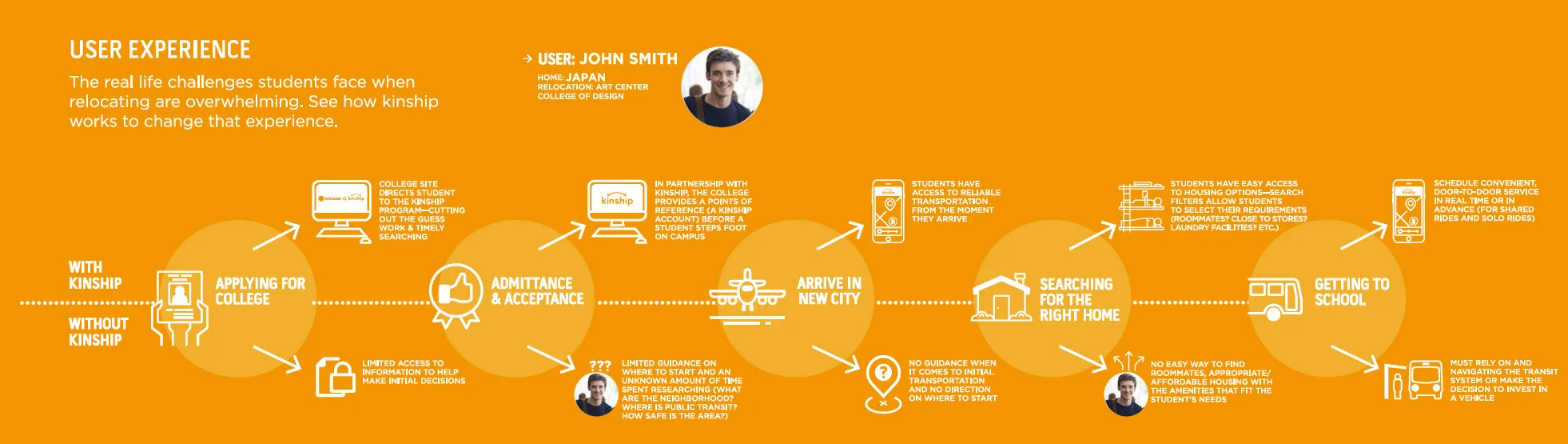
Web service for stakeholders
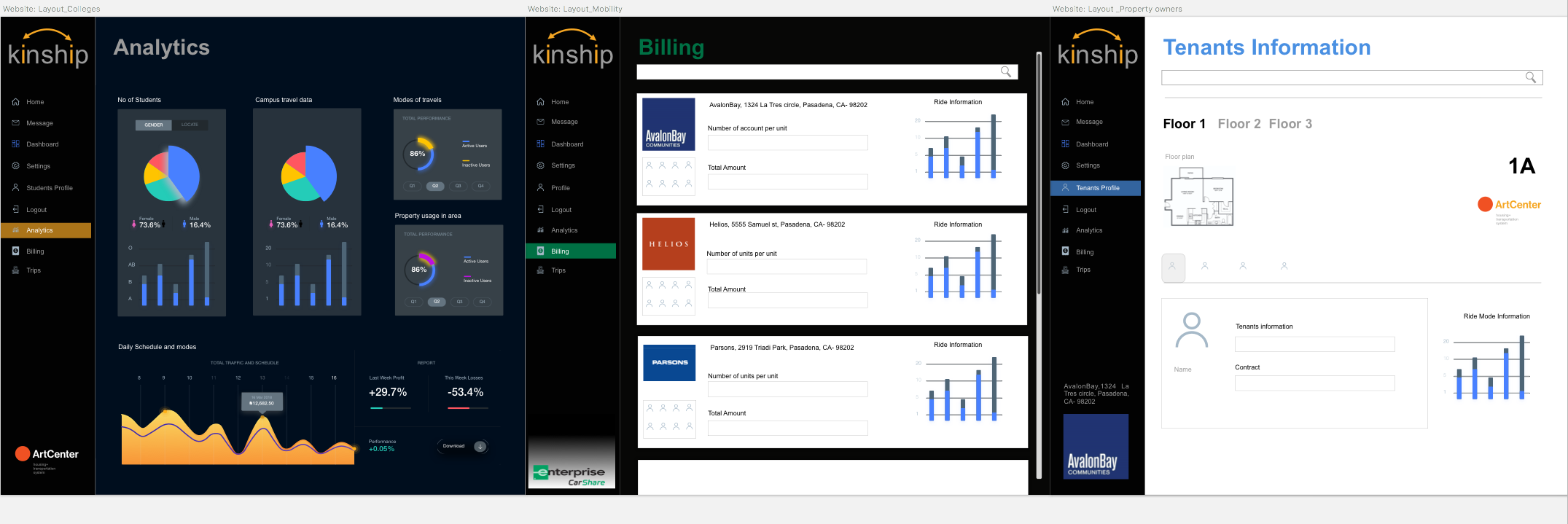
Low Fidelity prototype: Web base Portals for stakeholders