
A 2030 taxi for New York, designed in 2013 and re-checked against 2026
We set out to design the next icon of New York: an electric yellow cab that puts passengers up front, keeps the driver in the loop, and lets wheelchair users ride the same cab as everyone else. Thirteen years later, I scored those bets against what the city actually did.
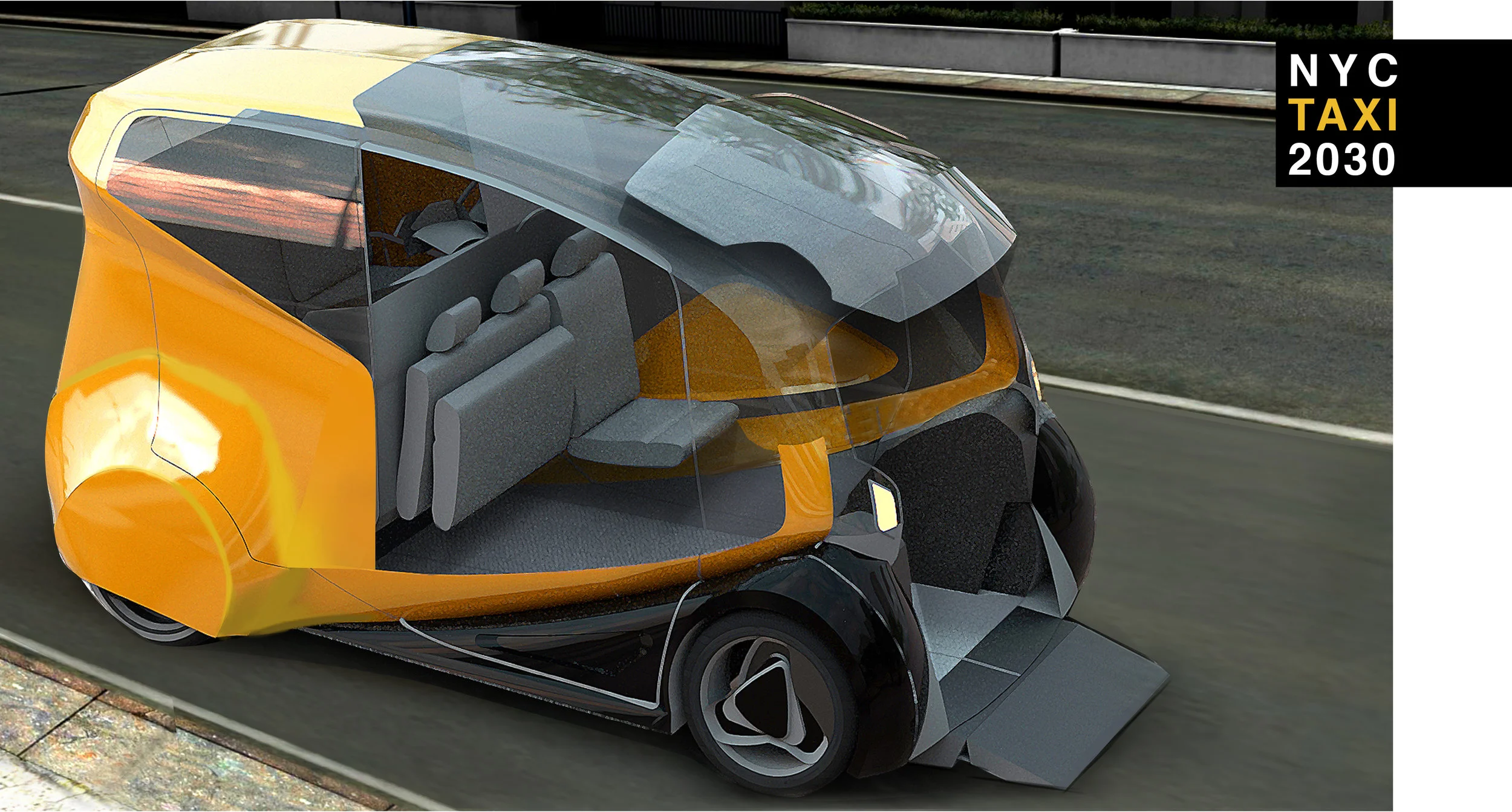
Accessibility and keeping a human driver turned out to be the right bets for New York. A purpose-built taxi did not: the city's own attempt failed, and the fleet went back to off-the-shelf vehicles.
Three facts that reframe the 2013 concept
Design the next icon of New York
How do we create a new icon for New York and give passengers a ride they can't get anywhere else?
In 2013 the Ford Crown Victoria was being retired, the city was about to adopt the Nissan NV200 as its "Taxi of Tomorrow," and PlaNYC was pushing for a greener city by 2030. That made the taxi an open design question for the first time in decades.
The cab was oversized for the job
A full-size sedan built for highways was spending its life idling in Midtown congestion, usually carrying one or two people.
Riders came for the city, not the car
The passenger's best seat faced a partition and a screen. The thing people actually came to New York for was outside the window.
Accessibility was an afterthought
Wheelchair users were left waiting for a small pool of special vehicles, and the city's chosen replacement taxi was facing an accessibility lawsuit.
The best benchmark was London
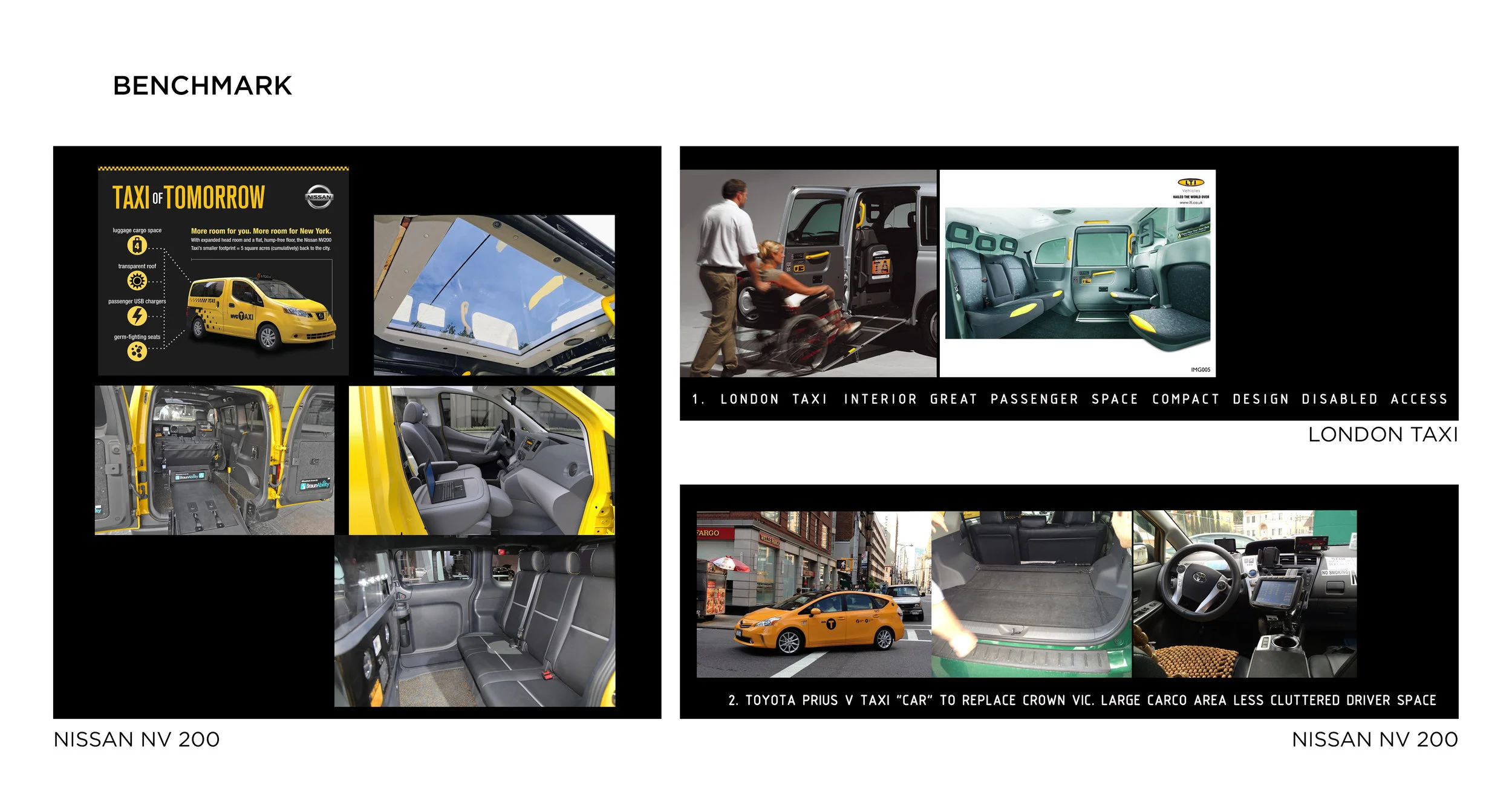
Benchmarking the London taxi, the Nissan NV200 and the Toyota Prius v showed that London's cab got space and step-free access right, and the others traded both for cost.
Rebuilding the cab around the rider, the driver and the street
Put passengers up front
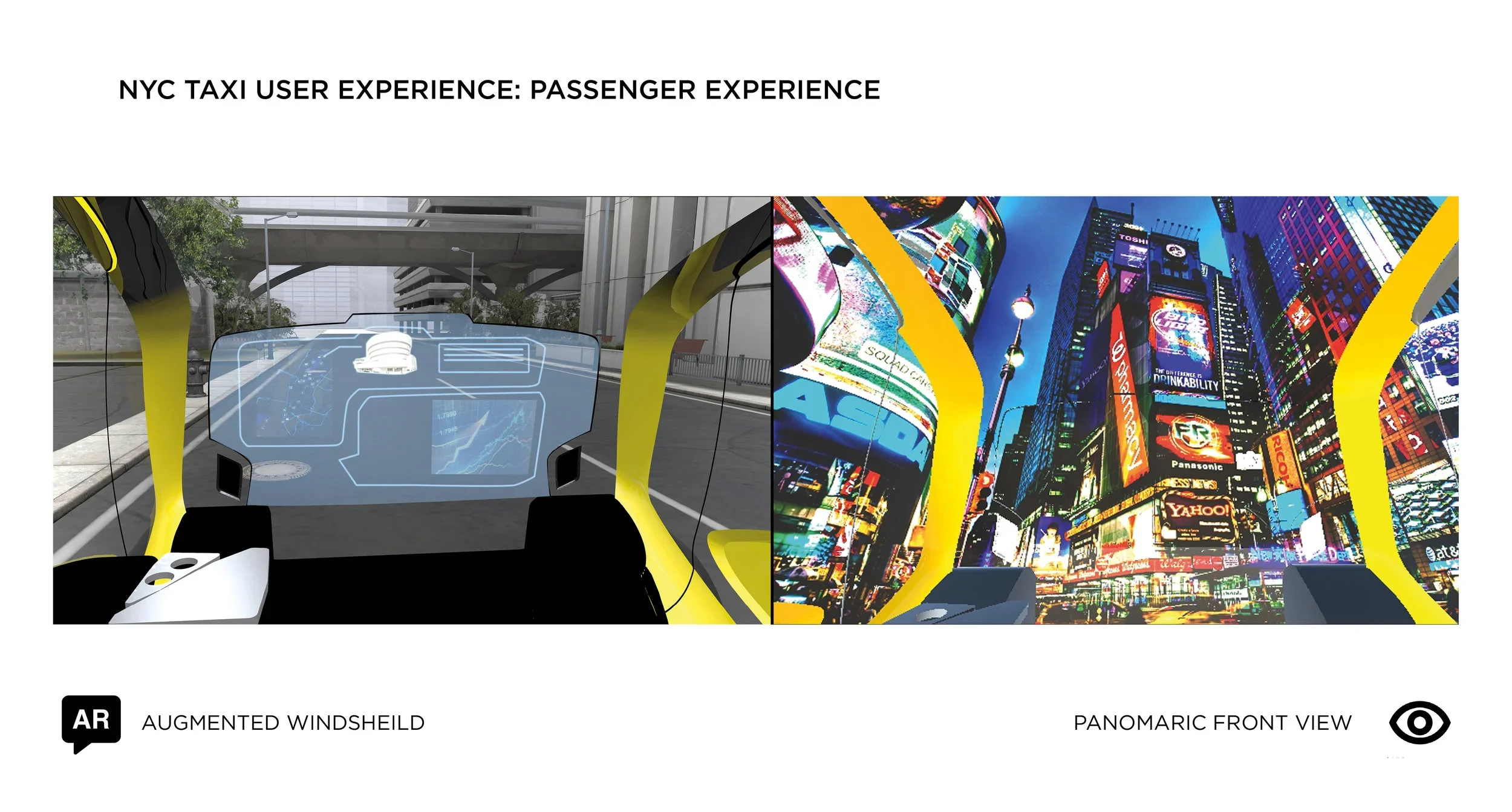
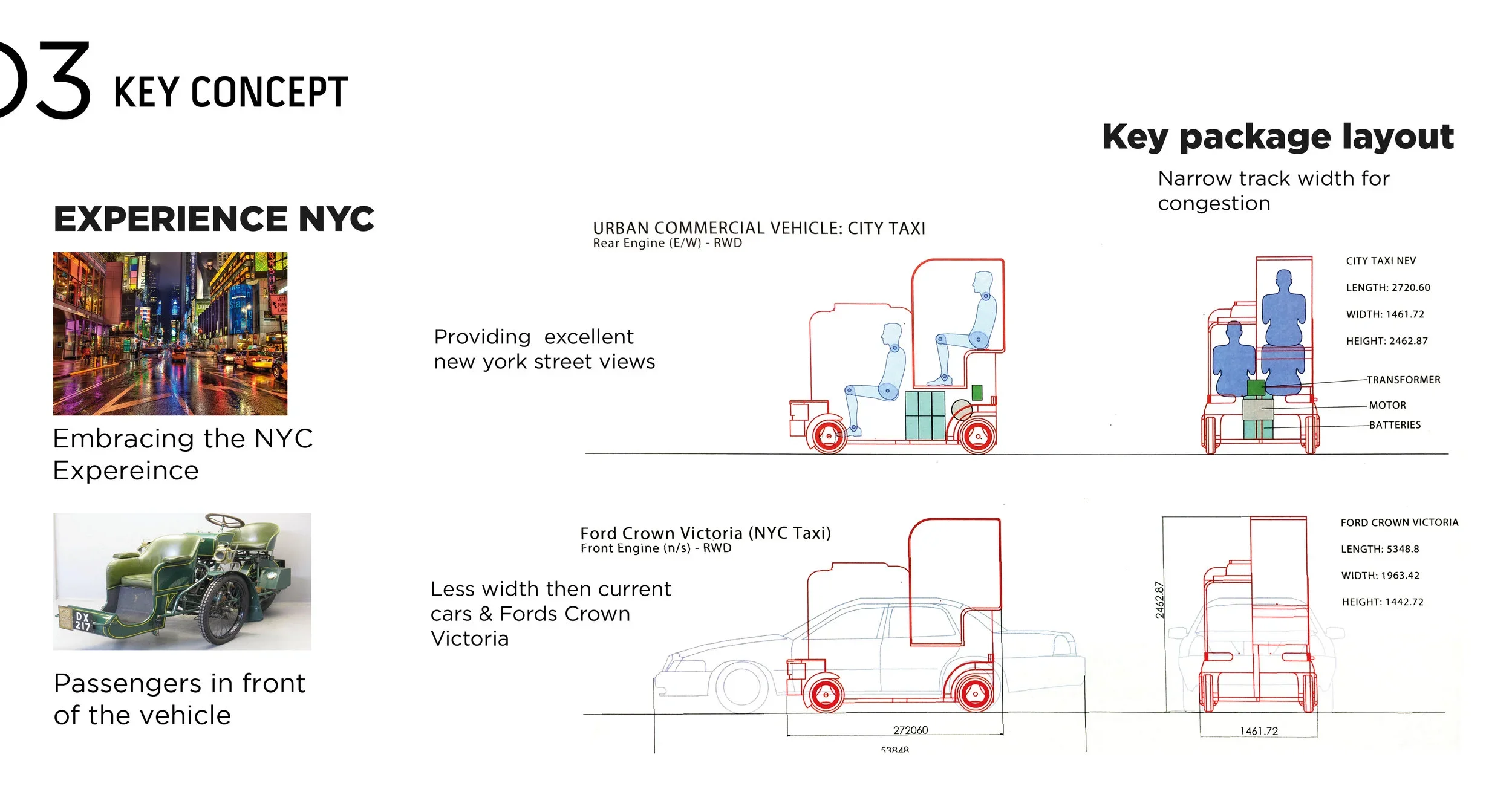
We moved the passenger cabin to the front of the vehicle, behind a panoramic glass canopy, so the ride itself becomes a way of seeing New York. An augmented windshield could overlay wayfinding and points of interest.
Keep the driver, but rethink where they sit
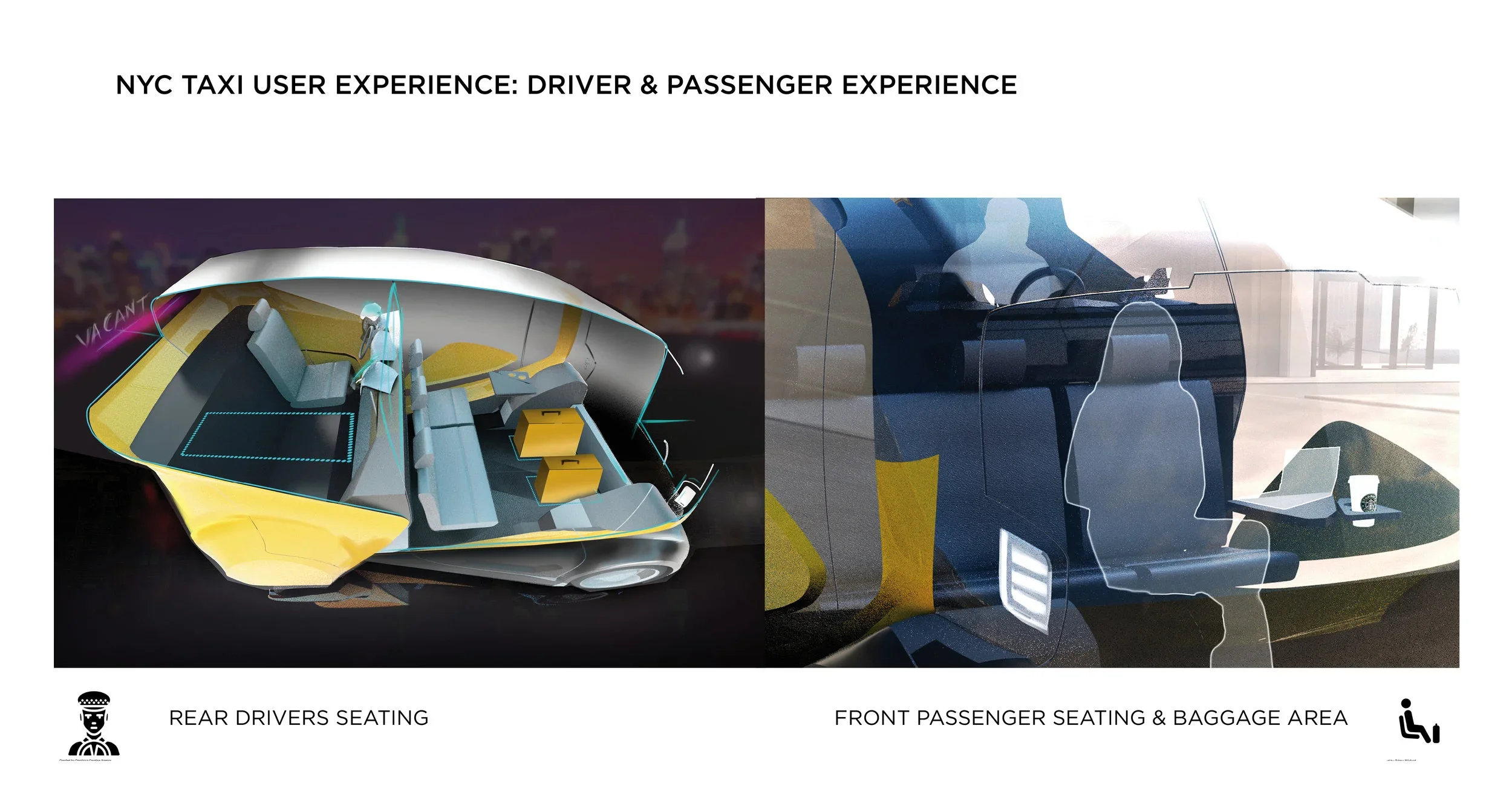
The driver sits behind and above the passengers, with a clear view over their heads. That frees the front of the cab for riders and luggage, and makes the driver part of the vehicle's character instead of someone behind a partition.
Build wheelchair access into the cab, not onto it
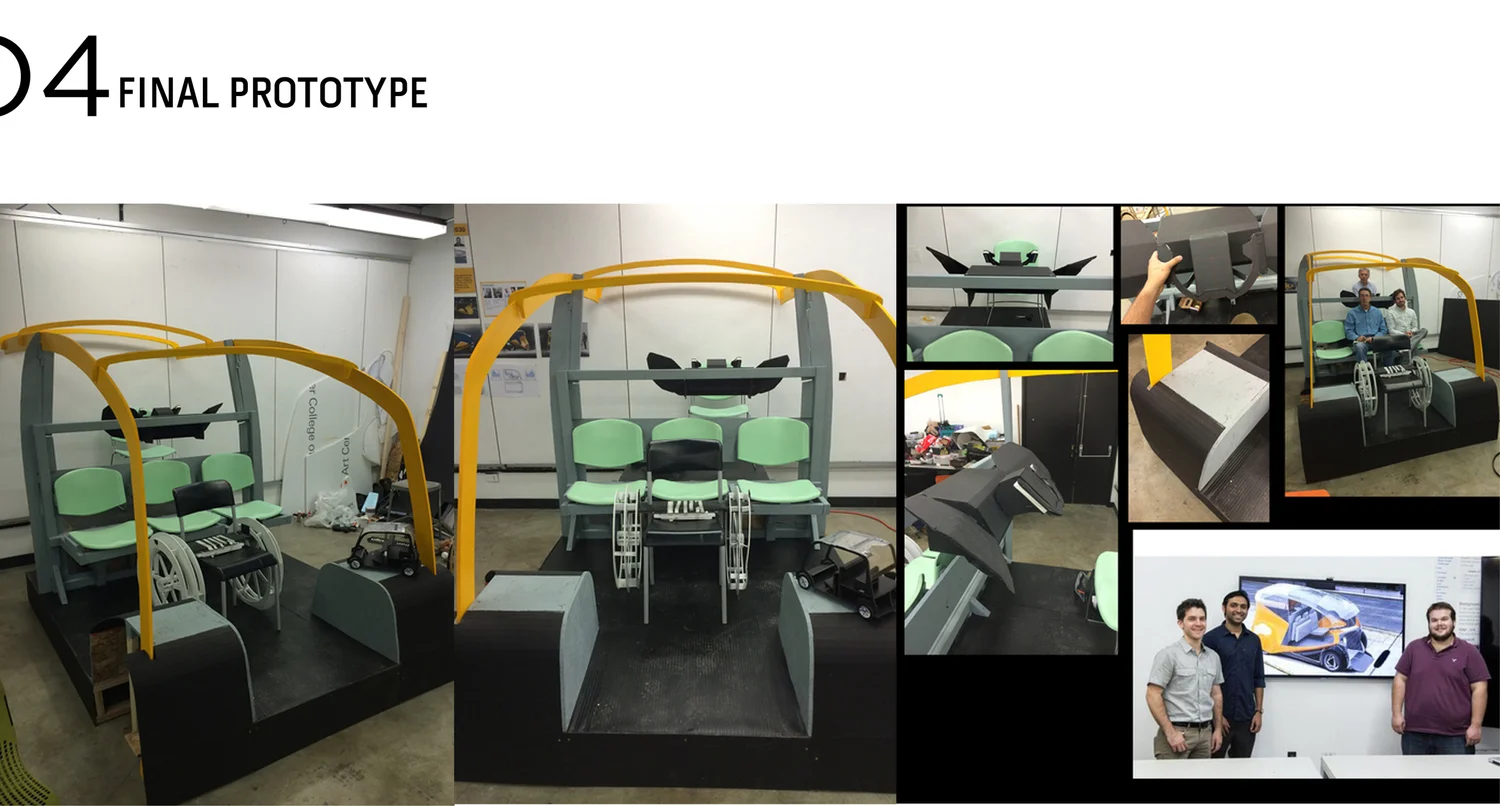
A ramp deploys from the front, and the seats fold away, so a wheelchair user rides in the same cab and the same seat position as everyone else. Every vehicle in the fleet would be accessible, rather than a separate, scarce fleet of special vehicles.
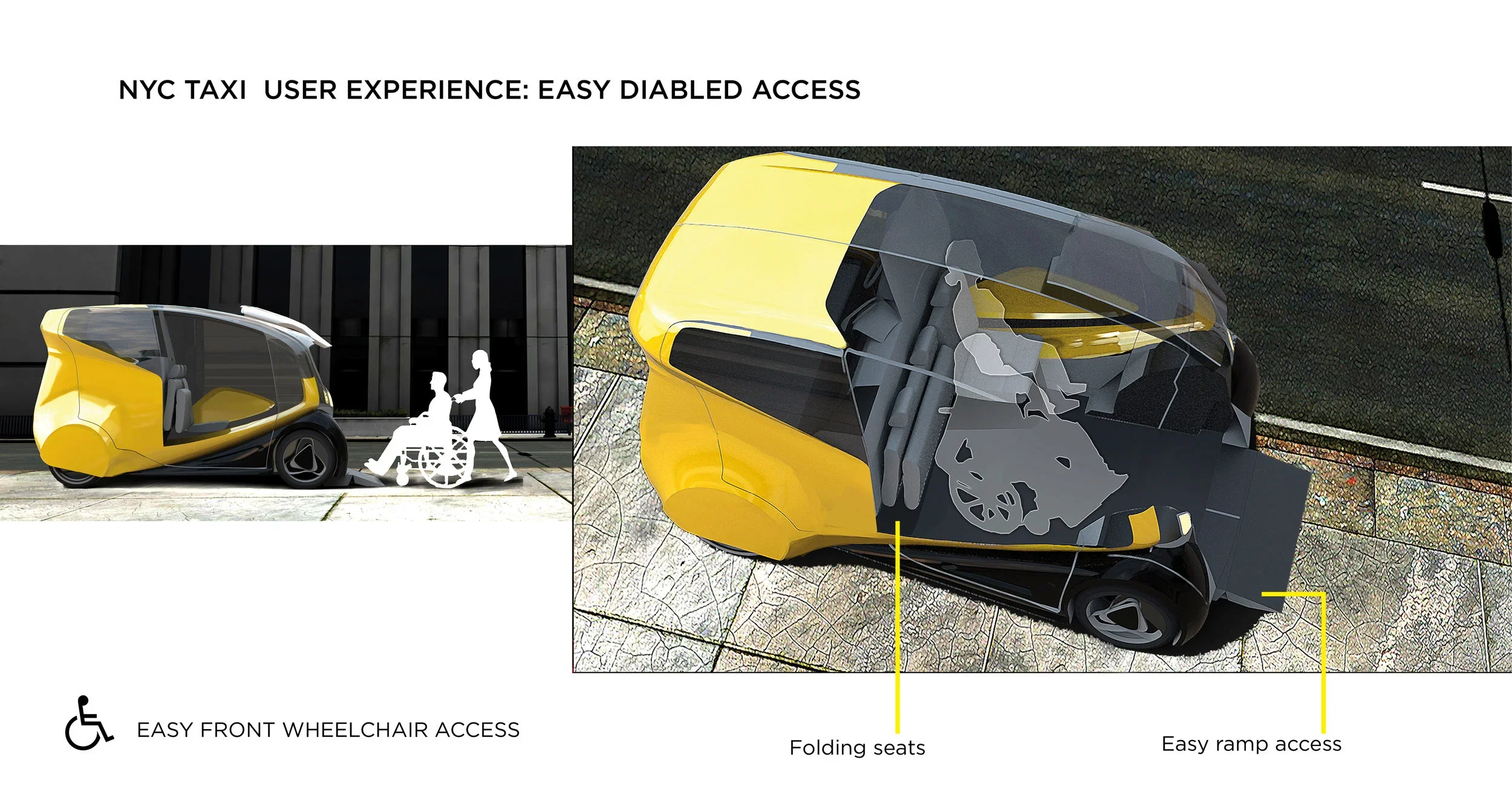
Shrink the package, electrify the powertrain
A narrow track and short wheelbase, with the electric drive and batteries packaged under the floor, gave a cab narrower than the Crown Victoria it replaced and better suited to congested streets. Digital advertising and a companion app were part of the business model from the start.
From a wall of sketches to a full-scale buck
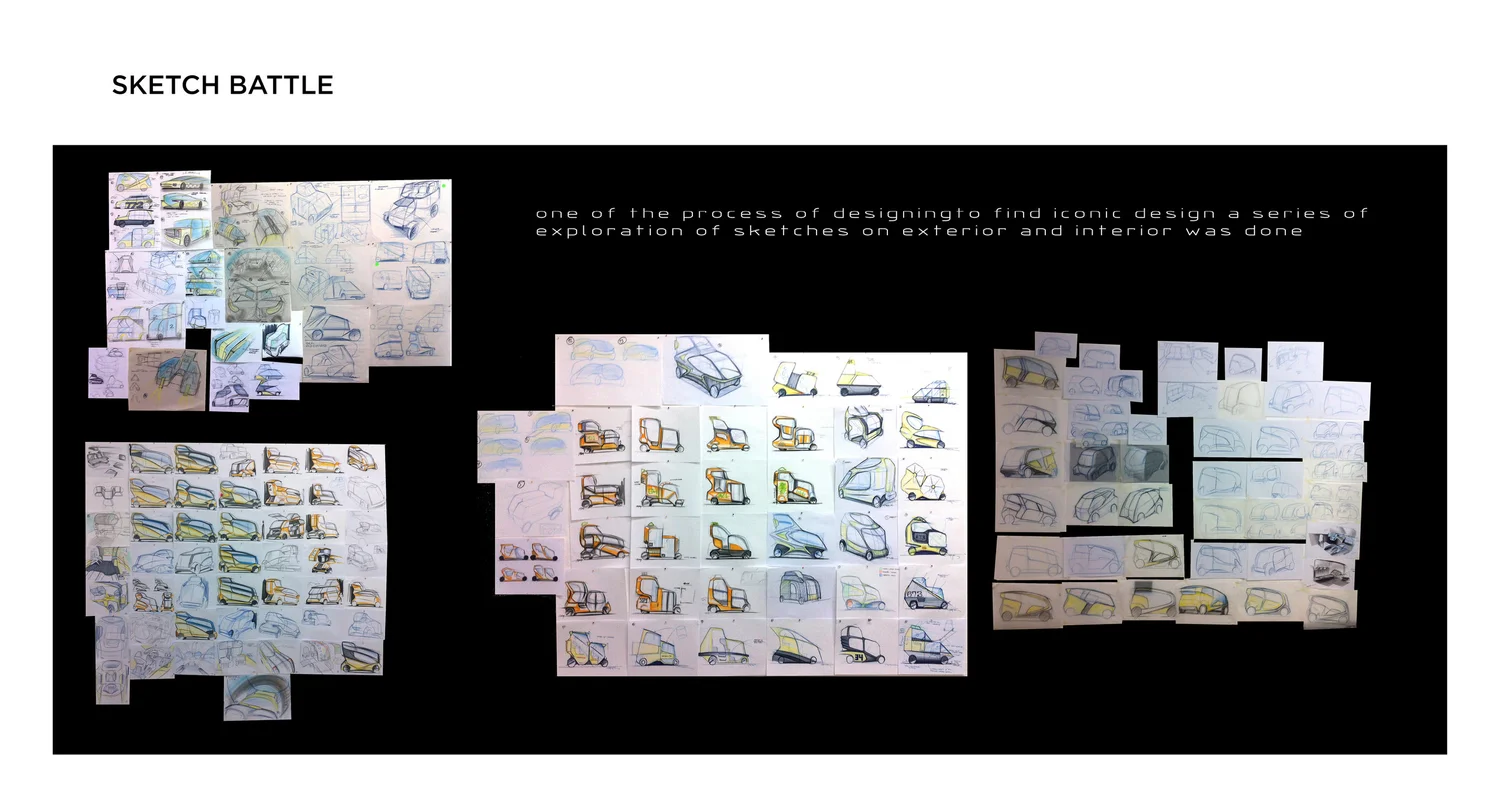
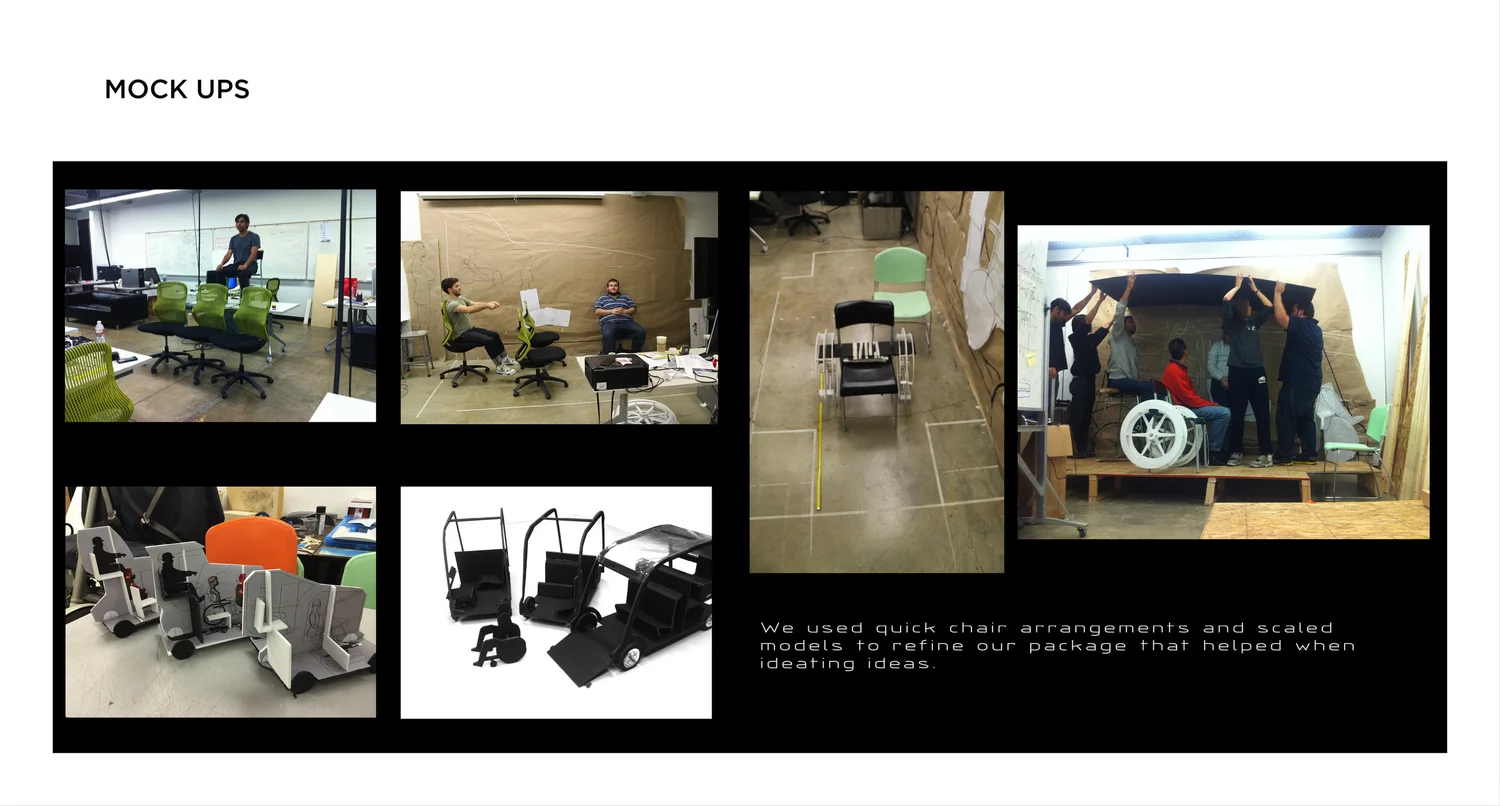
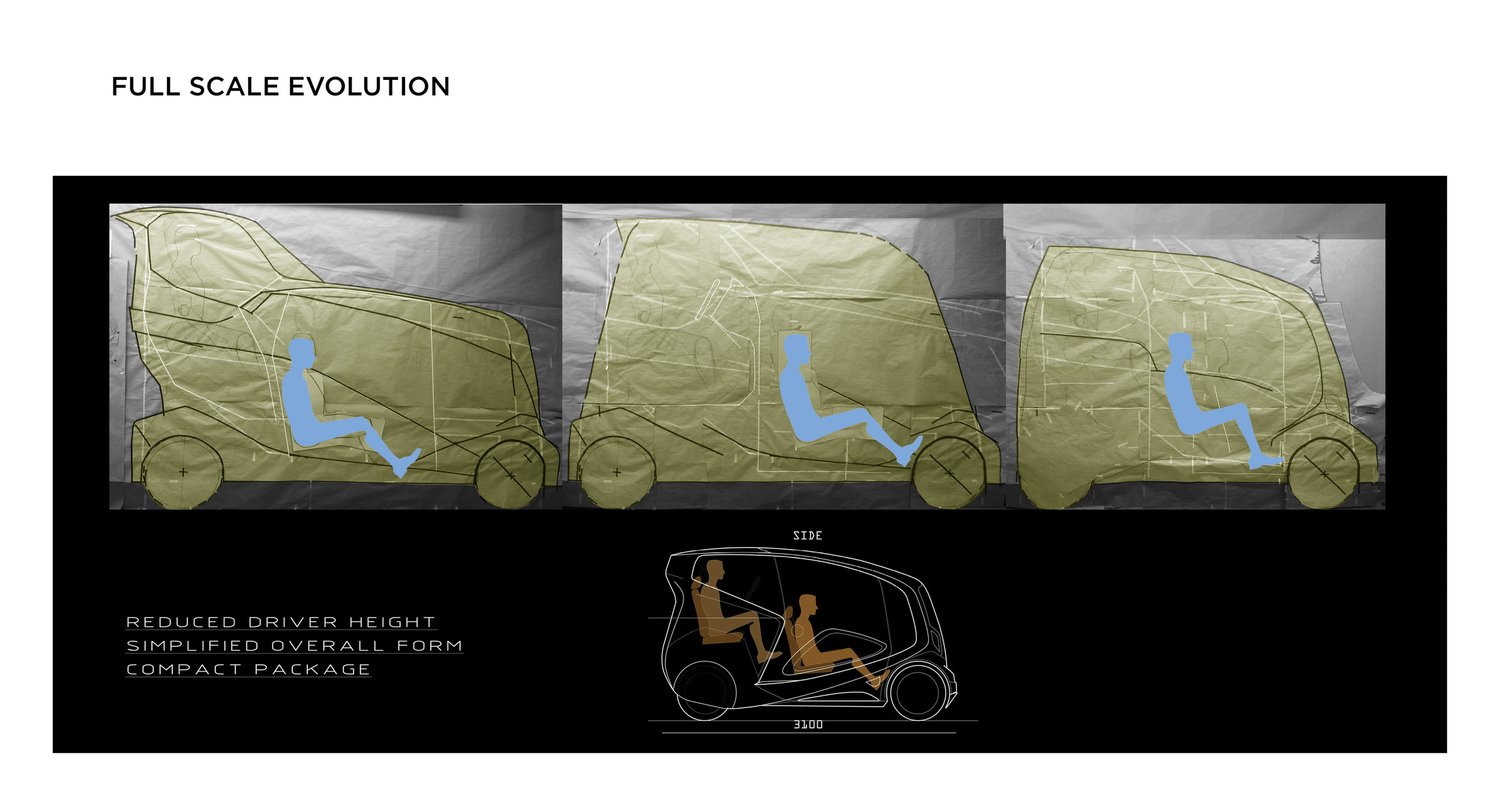
We explored the exterior and interior through rounds of sketching, then moved to chairs and scale models to test seating arrangements, and finally built a full-scale buck to sit in.
Lower the driver
Sitting in the buck showed the raised driver position was higher than it needed to be, so we brought it down.
Simplify the form
Each full-scale round removed surface complexity until the silhouette read clearly from the curb.
Compact the package
Working at full scale let us tighten the overall footprint without losing passenger space.
What I got right, and what I got wrong
Each idea from the concept, scored against what New York actually did over the following thirteen years.
Accessibility as a core feature
Held upA human driver in 2030
Held upElectric powertrain
Right directionDigital advertising
Held upA purpose-built NYC taxi
Didn't holdFront ramp and rear driver
Open questionSame intent, built for how the city actually buys and runs taxis
An accessibility kit, not a new car
Design a step-free, side-entry conversion for off-the-shelf EVs, so owner-drivers can meet the accessibility mandate without buying bespoke hardware.
A driver-assist cabin, not a driverless one
Use sensing and AI to reduce the driver's workload — wayfinding, accessibility securement checks, payment — while keeping a person in charge of the ride.
Design for the curb
With congestion pricing handling traffic, the bottleneck is pickup and drop-off. Design the boarding sequence around dwell time and curb space.
Validate with the people it serves
Test with wheelchair users and working drivers from the first buck, not just designers sitting in the seats.
Two habits from this project that carried into my professional work
Sit in it before you ship it
The buck taught me that people's bodies find problems drawings can't. At Volvo I used the same approach, validating an HVAC control redesign with mockups and buck-simulator sessions with 15 participants.
Design for the person the system fails first
This was the first time I treated accessibility as the core of a design. At CARIAD I ran screen-reader and usability sessions with people with disabilities to validate CVAA-compliant features across VW Group brands.